cast of austin powers spy who shagged me revealed through comedy legends
Table of Contents
- The Iconic Cast of Austin Powers: International Man of Mystery (1997) – Meet the Original Spy Team
- Mike Myers as Austin Powers: The Quintessential Parody Spy
- Elizabeth Hurley as Vanessa Kensington: The Femme Fatale with a Twist
- Robert Wagner as Number Two: The Straight Man in a World of Madness
- Chemistry and Evolution: How the Original Cast Shaped the Franchise
- Box Office Success and Cultural Impact: Numbers and Reception
- Behind-the-Scenes Anecdotes: Improvisation and Preparation
- Return of the Cast in Austin Powers: The Spy Who Shagged Me (1999) – Revisiting the Golden Era
- Expanded Roles of Returning Cast Members and Their Impact
- New Additions and Their Contributions to the Sequel’s Comedy
- Comparative Analysis of Acting Styles: Veterans vs. Newcomers
- Cast Chemistry and On-Screen Dynamics
- Satirical Brilliance: Cast Portrayals and Late-'90s Society
- Behind-the-Scenes Moments and Cast Contributions to the Film’s Legacy
- Key Scene Analysis: The "Mo’ Money" Moment and Cast Brilliance
- The Expanded Universe: Cast of Austin Powers in Goldmember (2002) – Reinventing Spy Parody with New and Recurring Talent
- Core Cast Return: Mike Myers, Elizabeth Hurley, and Beau Bridges
- New Additions: Seth Green, Karen McDougal, and Bret McKenzie as Goldmember
- Cast Dynamics and the Evolution of Humor in Goldmember
- Production Challenges and Cast Contributions to Goldmember ’s Mixed Reception
- Meta-Humor and Self-Aware Jokes in Goldmember
- Legacy of the Cast: How Austin Powers Redefined Comedy and Parody in Pop Culture
- Iconic Performances and Their Lasting Cultural Footprint
- Influence on the Spy Parody and Buddy Comedy Genres
- Top 5 Most Iconic Austin Powers Cast Moments
- Impact on Later Generations of Comedians and Actors
- Behind the Scenes with the Cast: The Making of Austin Powers Films
- Production Challenges and Technical Innovations
- Timeline of Key Production Moments
- Top 5 Behind-the-Scenes Stories Involving the Cast
- Cast Preparation and Method Acting
- The Austin Powers Cast in Modern Media: Reboot Hopes, Spin-offs, and Cultural Revival
- Fan Demand and Industry Interest in a Reboot
- Speculative Casting: Modern Actors vs. the Originals
- Cultural Revival: Austin Powers in Modern Pop Culture
- Challenges of Modernizing the Franchise
- Spin-offs and Extended Universe Potential
The 1999 sequel Austin Powers: The Spy Who Shagged Me brought back the groovy charm of the original while introducing a new wave of comedic talent that cemented the franchise as a cultural phenomenon. With Mike Myers’ dual role as Austin Powers and Dr. Evil, Elizabeth Hurley’s sultry yet fierce Vanessa Kensington, and the explosive chemistry of newcomers like Will Ferrell and Heather Graham, the film became a masterclass in parody and satire. Behind the scenes, the cast’s improvisations and behind-the-camera antics turned set challenges into legendary moments, blending sharp wit with over-the-top absurdity that defined an era.
This sequel didn’t just revive the 1960s spy spoof—it redefined it, blending nostalgia with late-’90s humor to create a template for future comedies. From the gold-plated villainy of Dr. Evil to the seductive menace of Foxy Cleopatra, the cast’s performances turned The Spy Who Shagged Me into more than a sequel: it became a blueprint for how parody could dominate pop culture. Decades later, their impact lingers in memes, callbacks, and the enduring legacy of a franchise that dared to laugh at itself—and at everything else.

The Iconic Cast of Austin Powers: International Man of Mystery (1997) – Meet the Original Spy Team

Austin Powers: International Man of Mystery (1997) marked a turning point in comedy cinema by blending sharp satire, retro nostalgia, and irreverent humor to create a franchise that transcended its parody roots. Released during a period when spy films were dominated by serious, action-driven narratives like James Bond, the original film subverted expectations by embracing the campy, over-the-top aesthetics of 1960s and 1970s spy parodies. Its success lay not only in its script but in the dynamic performances of its ensemble cast, whose chemistry and comedic timing transformed the film into a cultural phenomenon. The original trio—Mike Myers as the bumbling yet charismatic Austin Powers, Elizabeth Hurley as the seductive and ambitious Vanessa Kensington, and Robert Wagner as the stoic Number Two—became the cornerstone of the franchise’s identity, setting a benchmark for parody films that followed.
The film’s humor thrived on exaggerated stereotypes, anachronistic pop culture references, and a willingness to push boundaries, all of which were amplified by the cast’s ability to commit fully to the absurdity. Myers’ portrayal of Austin Powers, in particular, became a defining role of the late 1990s, blending physical comedy, rapid-fire wit, and a self-aware charm that resonated with audiences. Meanwhile, Hurley’s Vanessa Kensington embodied the fusion of glamour and villainy, while Wagner’s Number Two brought a grounded yet hilariously deadpan presence to the eccentric spy team. Their performances were not just comedic but also culturally significant, reflecting the era’s fascination with nostalgia and the reinvention of classic genres through humor.
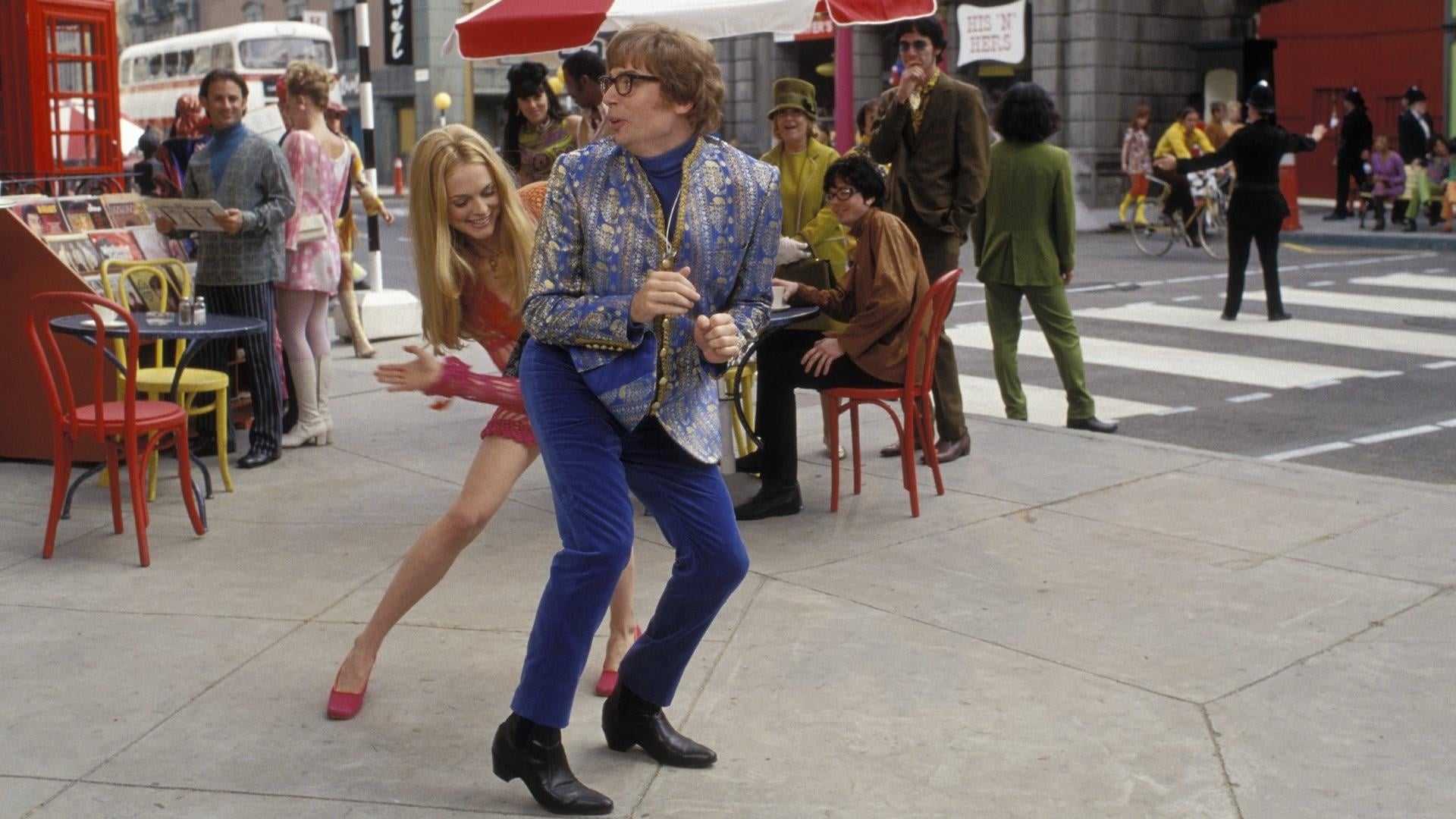
Mike Myers as Austin Powers: The Quintessential Parody Spy
Mike Myers’ performance as Austin Powers was a masterclass in comedic timing and character transformation. Drawing inspiration from figures like James Bond, Elvis Presley, and even Austin Powers’ namesake (a fictional spy from a 1967 novel), Myers crafted a character who was equal parts ridiculous and endearing. Austin’s exaggerated accent, catchphrases ("Yeah, baby!"), and penchant for groin-based humor became instant cultural touchstones, while his physical comedy—such as his signature dance moves and exaggerated reactions—added a layer of visual humor that was both nostalgic and fresh.
Myers’ improvisational skills were instrumental in shaping Austin’s persona. Scenes like the "Shagadelic" number, where Austin’s seduction techniques are parodied through a series of increasingly absurd groin gyrations, were born from spontaneous moments on set. His ability to balance Austin’s idiocy with moments of genuine pathos (such as his backstory involving his frozen wife) added depth to the character, making him more than just a one-dimensional joke. Myers’ performance earned critical acclaim, with many praising his versatility and commitment to the role. The character’s success also cemented Myers as a comedy powerhouse, paving the way for future projects like Shrek and The Love Guru.
Elizabeth Hurley as Vanessa Kensington: The Femme Fatale with a Twist
Elizabeth Hurley’s portrayal of Vanessa Kensington was a standout element of the original film, bringing a mix of glamour, vulnerability, and dark humor to her role as Austin’s love interest and eventual ally. Hurley, who was relatively unknown before the film, underwent extensive preparation to embody the character’s British aristocracy and seductive allure. Her performance was a departure from traditional "damsel in distress" tropes, as Vanessa was both a villain and a victim, trapped in a frozen state by Austin’s nemesis, Dr. Evil. Hurley’s chemistry with Myers was electric, particularly in scenes where their flirtatious banter escalated into physical comedy, such as the infamous "grope" scene where Austin’s advances are met with increasingly creative defenses.
Vanessa’s character also served as a commentary on gender dynamics in spy films, offering a more nuanced portrayal of female characters than typical 1960s/70s parodies. Hurley’s ability to convey Vanessa’s intelligence, wit, and hidden strength made her a fan favorite, and her performance earned her widespread recognition. The film’s success catapulted Hurley into Hollywood stardom, though her role in the franchise remained limited to the first film, a decision that later became a point of discussion among fans.
Robert Wagner as Number Two: The Straight Man in a World of Madness
Robert Wagner’s role as Number Two, Austin’s long-suffering and exasperated assistant, provided the perfect counterpoint to the film’s absurdity. Wagner, a veteran actor known for his work in television and film, brought a dry, deadpan delivery to the character, making Number Two’s reactions to Austin’s antics all the more hilarious. His portrayal was a masterclass in physical comedy, particularly in scenes where he was forced to endure Austin’s ridiculous schemes, such as the "grope" sequence or the chaotic escape from Dr. Evil’s lair. Wagner’s experience working with a younger cast also added a layer of authenticity to his performance, as he navigated the film’s over-the-top humor with a straight face.
Number Two’s character was pivotal in grounding the film’s satire, as his exasperated expressions and occasional moments of frustration provided a relatable contrast to Austin’s mania. Wagner’s performance was so well-received that he reprised the role in the sequels, though his character’s dynamic shifted slightly in later installments. His contribution to the original film’s success cannot be overstated, as his comedic timing and physicality were essential in elevating the film’s parody elements.
Chemistry and Evolution: How the Original Cast Shaped the Franchise
The chemistry among the original cast members—particularly Myers, Hurley, and Wagner—was a defining feature of Austin Powers: International Man of Mystery and set the tone for the franchise’s future installments. Their ability to play off one another’s strengths created a cohesive comedic dynamic that was both unpredictable and perfectly timed. For example, the trio’s interactions in scenes like the "grope" sequence or the film’s climactic battle were built on years of improvisation and rehearsal, resulting in a naturalness that felt spontaneous.
In the sequels, Austin Powers: The Spy Who Shagged Me (1999) and Austin Powers in Goldmember (2002), the cast’s dynamic evolved, with new additions like Heather Graham (Foxy Cleopatra) and Seth Green (Scott Evil) joining the mix. While Myers and Wagner reprised their roles, the absence of Hurley (due to scheduling conflicts) altered the franchise’s chemistry, leading to a more ensemble-driven approach in later films. However, the original trio’s impact remained undeniable, as their performances in the first film established the blueprint for the franchise’s humor and style.
Box Office Success and Cultural Impact: Numbers and Reception
Austin Powers: International Man of Mystery was a box office triumph, grossing over $356 million worldwide against a production budget of $45 million, making it one of the highest-grossing R-rated comedies of its time. The film’s success was driven by its unique blend of nostalgia, parody, and irreverence, which resonated with audiences tired of traditional spy films. Critics praised the film’s humor, with many highlighting Myers’ performance as Austin Powers. The film received two Academy Award nominations, including Best Original Screenplay and Best Original Song ("The Perfect Song"), though it did not win in either category. However, its cultural impact was undeniable, as it spawned a franchise, merchandise, and even a stage show.
The film’s cult following grew over time, with its quotable lines ("Groovy, baby!"), catchphrases, and iconic scenes becoming staples of 1990s pop culture. Its influence extended beyond comedy, inspiring other parody films and TV shows to embrace self-aware humor and nostalgia. The original cast’s performances were instrumental in this success, as their chemistry and commitment to the material elevated the film from a simple parody to a comedy classic.
Behind-the-Scenes Anecdotes: Improvisation and Preparation
The production of Austin Powers: International Man of Mystery was filled with memorable behind-the-scenes moments that contributed to the film’s unique tone. Mike Myers was known for his improvisational skills, often ad-libbing lines and scenes that were later incorporated into the final cut. For example, Austin’s infamous groin-based humor was largely improvised, with Myers and the cast exploring increasingly absurd ways to reference the character’s "grope" catchphrase. Elizabeth Hurley, meanwhile, prepared for her role by studying British aristocracy and practicing her accent, though she also embraced the character’s more eccentric traits, such as her love of exotic animals and her penchant for dramatic entrances.
Robert Wagner, who was nearly 60 years old at the time of filming, found himself working alongside a cast that included much younger actors like Seth Green and Michael York. Despite the age gap, Wagner’s professionalism and comedic timing earned him the respect of his younger co-stars, and his ability to deliver
Return of the Cast in Austin Powers: The Spy Who Shagged Me (1999) – Revisiting the Golden Era
The Spy Who Shagged Me (1999) marked a triumphant return for the original Austin Powers ensemble, blending nostalgia with expanded comedic ambition. The sequel not only retained its core cast but also introduced fresh talent, creating a dynamic that elevated the film’s satirical edge and box-office success. Mike Myers’ dual performance as Austin Powers and Dr. Evil became a cornerstone of the sequel, while new additions like Will Ferrell and Heather Graham injected the franchise with unexpected energy. The cast’s chemistry—both among veterans and newcomers—propelled the film into a cultural phenomenon, cementing its legacy as a late-'90s comedy classic.
The sequel’s success hinged on its ability to balance parody with sharp social commentary, a feat achieved through meticulous casting and character development. Returning stars like Elizabeth Hurley (as Vanessa Kensington) and Robert Wagner (as Number Two) deepened their roles, while Beau Bridges’ chilling portrayal of Dr. Evil and Ferrell’s chaotic Scott Evil introduced a new layer of absurdity. The film’s cast dynamics, from Myers’ dual-role mastery to the fiery rivalry between Hurley’s Vanessa and Graham’s Foxy Cleopatra, became defining elements of its humor. Below, an analysis explores how the sequel’s ensemble transformed the franchise, its satirical brilliance, and the behind-the-scenes moments that shaped its iconic status.
Expanded Roles of Returning Cast Members and Their Impact
The original Austin Powers cast returned with expanded roles, allowing characters to evolve while retaining their signature charm. Mike Myers’ dual performance as Austin Powers and Dr. Evil became the film’s centerpiece, with each persona refining the other. Austin’s swagger was amplified by his 1960s nostalgia, while Dr. Evil’s villainy grew more elaborate, culminating in the infamous "Mo’ Money" scene—a moment that became synonymous with the film’s over-the-top humor.
Elizabeth Hurley’s Vanessa Kensington transitioned from a love interest to a more assertive, independent figure, reflecting the shifting dynamics of gender roles in the late '90s. Her character’s evolution, particularly in scenes where she outsmarts Austin, added a layer of subversive comedy. Robert Wagner’s Number Two remained a stalwart of the franchise, though his role was slightly diminished, serving as a foil to the more dynamic new villains. The returning cast’s chemistry was palpable, with Myers and Hurley’s on-screen dynamic carrying the emotional weight of the film, even as the plot leaned into farce.
New Additions and Their Contributions to the Sequel’s Comedy
The introduction of new cast members in The Spy Who Shagged Me expanded the film’s comedic scope and satirical reach. Beau Bridges’ Dr. Evil, though initially a parody of Austin, became a full-fledged antagonist with a menacing yet absurd presence. His rivalry with Austin—highlighted in their battle over the "laser satellite"—added a layer of physical comedy that contrasted with the more dialogue-driven humor of the first film.
Heather Graham’s Foxy Cleopatra emerged as a standout addition, bringing a mix of seduction and brutality to her role as Austin’s nemesis. Her character’s dynamic with Hurley’s Vanessa introduced a catfight subplot that became one of the film’s most memorable sequences. Will Ferrell’s Scott Evil, Dr. Evil’s bumbling assistant, provided a perfect counterpoint to Bridges’ villainy. Ferrell’s improvisational skills—particularly in scenes like the "Scott Evil’s Death" gag—added a spontaneous energy that resonated with audiences.
The new cast members didn’t just fill roles; they redefined the franchise’s comedic tone. Ferrell’s physical comedy and Graham’s sharp wit complemented Myers’ and Hurley’s established styles, creating a balanced ensemble that kept the film’s humor fresh and unpredictable.
Comparative Analysis of Acting Styles: Veterans vs. Newcomers
The sequel’s success lay in the contrast between the returning cast’s polished performances and the newcomers’ raw, improvisational energy. Myers’ dual roles required a delicate balance—Austin’s suave charm and Dr. Evil’s menacing authority had to feel distinct yet interconnected. His ability to switch between personas seamlessly, particularly in scenes like the "I’m Dr. Evil" reveal, showcased his comedic range.
Elizabeth Hurley’s performance evolved from the first film, with Vanessa Kensington embodying a more confident, almost predatory allure. Hurley’s chemistry with Myers remained electric, but her interactions with Graham’s Foxy Cleopatra introduced a new layer of rivalry that elevated the film’s humor. Robert Wagner’s Number Two, while less prominent, provided a steadying presence, grounding the film’s more outlandish moments.
The newcomers brought a different flavor of comedy. Beau Bridges’ Dr. Evil was more sinister than Myers’ original, while Ferrell’s Scott Evil injected a chaotic, unpredictable energy. Heather Graham’s Foxy Cleopatra combined seduction with a lethal edge, making her one of the most memorable villains in spy comedy. The contrast between the veterans’ refined performances and the newcomers’ improvisational brilliance created a dynamic that kept the film engaging from start to finish.
Cast Chemistry and On-Screen Dynamics
The chemistry between the original and new cast members was a defining feature of The Spy Who Shagged Me. Myers’ dual roles allowed for a unique interplay between Austin and Dr. Evil, with their rivalry reaching a climax in the film’s final act. The dynamic between Hurley and Graham, particularly in their catfight and shared scenes, added a layer of female-driven comedy that was both subversive and entertaining.
Behind the scenes, the cast’s camaraderie contributed to the film’s success. Will Ferrell’s improvisations, such as his exaggerated reactions to Dr. Evil’s schemes, were often ad-libbed and became fan favorites. Heather Graham underwent rigorous training to perfect her martial arts skills for Foxy Cleopatra’s fight scenes, ensuring her physical comedy was as convincing as her acting. Mike Myers faced the challenge of balancing two lead roles, a feat he achieved by treating Austin and Dr. Evil as entirely separate characters, even in their interactions.
The cast’s ability to play off one another—whether through Myers’ rapid-fire insults, Ferrell’s chaotic energy, or Hurley and Graham’s fiery rivalry—created a cohesive comedic experience that resonated with audiences worldwide.
Satirical Brilliance: Cast Portrayals and Late-'90s Society
The Spy Who Shagged Me used its cast to critique and parody societal trends of the late 1990s. The exaggerated villains—Dr. Evil, Fat Bastard (played by Mike Myers in a third role), and Mini-Me (Verne Troyer)—satirized the era’s obsession with wealth, technology, and celebrity culture. Dr. Evil’s demand for "Mo’ Money" became a shorthand for corporate greed, while his laser satellite plans mocked Cold War-era paranoia.
The film’s portrayal of gender dynamics, particularly through Vanessa Kensington and Foxy Cleopatra, reflected the shifting attitudes toward female empowerment. Hurley’s Vanessa was no longer a passive love interest but a formidable opponent, while Graham’s Foxy Cleopatra embodied the "femme fatale" trope with a modern twist. The cast’s performances amplified these themes, making the satire feel both timely and timeless.
Behind-the-Scenes Moments and Cast Contributions to the Film’s Legacy
Several behind-the-scenes moments contributed to The Spy Who Shagged Me’s enduring legacy. Will Ferrell’s improvisations, such as his over-the-top reactions to Dr. Evil’s demands, were often left in the final cut, adding a layer of spontaneity to the film. Heather Graham’s training for Foxy Cleopatra’s fight scenes ensured that her physical comedy was as impressive as her acting, a detail that fans still praise today.
Mike Myers’ dual roles required meticulous planning, with separate wardrobe, makeup, and rehearsal schedules for Austin and Dr. Evil. His ability to maintain the distinction between the two characters, even in their interactions, was a testament to his comedic skill. The cast’s collective effort—from Ferrell’s ad-libs to Graham’s training—created a film that felt both polished and fresh.
The sequel’s box office success ($226 million worldwide) and critical acclaim (78% on Rotten Tomatoes) were direct results of the cast’s performances. Their ability to blend parody with sharp social commentary ensured that The Spy Who Shagged Me remained a cultural touchstone, influencing future comedy and parody films.
Key Scene Analysis: The "Mo’ Money" Moment and Cast Brilliance
One of the most iconic scenes in the film is Dr. Evil’s "Mo’ Money" demand, a moment that encapsulates the cast’s comedic genius. Beau Bridges’ delivery of the line, combined with Ferrell’s chaotic reactions and Myers’ dual-role presence, created a perfect storm of absurdity. The scene’s success lay in the cast’s ability to commit fully to the parody, making it feel both ridiculous and strangely plausible.
"I demand mo’
The Expanded Universe: Cast of Austin Powers in Goldmember (2002) – Reinventing Spy Parody with New and Recurring Talent
The third installment of the Austin Powers franchise, Austin Powers in Goldmember (2002), marked a bold evolution in the series by introducing a fresh roster of characters while retaining core elements that defined its humor. Directed once again by Jay Roach, the film pushed the boundaries of parody with a more elaborate plot, darker undertones, and an expanded cast that included both returning favorites and bold new additions. While the first two films relied heavily on nostalgia and meta-commentary on 1960s spy films, Goldmember embraced a more self-aware, absurdist approach, blending satire with over-the-top action and sexual humor. The cast’s dynamic shifts—from the return of Mike Myers as Austin Powers to the introduction of Seth Green as the eccentric Scott Evil—reflected the franchise’s growing ambition, even as it faced mixed critical reception and production challenges. The film’s expanded universe introduced characters like Goldmember, a villainous parody of both James Bond villains and 1970s disco culture, and Mad Gina, a ruthless assassin with a penchant for violence and dark humor. These additions, alongside the return of Elizabeth Hurley as Dr. Evil’s daughter, Fat Amy, and Beau Bridges as Number Two, created a more complex narrative web. The cast’s performances, ranging from Myers’ relentless energy to Karen McDougal’s portrayal of the seductive but deadly Katrina Kensington, contributed to the film’s unique tone—a blend of raunchy comedy, action, and occasional moments of genuine pathos. Despite its flaws, Goldmember solidified the franchise’s place in pop culture, offering a final, ambitious chapter before its eventual conclusion.
Core Cast Return: Mike Myers, Elizabeth Hurley, and Beau Bridges
The foundation of Goldmember’s cast remained rooted in the original trio, each bringing their signature comedic timing to the film’s heightened absurdity. Mike Myers, who wrote, directed, and starred in the series, continued to embody Austin Powers with his signature British accent, swagger, and one-liners. His performance in Goldmember leaned even harder into the character’s delusional confidence, particularly in scenes where Austin’s ego clashed with the film’s darker themes. Myers’ dual role as Dr. Evil, now rebranded as "Scotty Evil" (a nod to his Scottish heritage), added layers of meta-humor, as the character’s incompetence and vanity reached new heights. Elizabeth Hurley reprised her role as Fat Amy, Dr. Evil’s daughter, though her character underwent a significant transformation. In Goldmember, Fat Amy was recast as a more assertive and sexually confident figure, reflecting the franchise’s willingness to embrace provocative humor. Hurley’s portrayal balanced the character’s vulnerability with a newfound assertiveness, particularly in her interactions with Austin. Beau Bridges returned as Number Two, though his role was reduced compared to previous films. His deadpan delivery of lines like "I am Number Two" remained a fan favorite, though his character’s diminished screen time reflected the film’s shift toward newer villains and dynamics. The return of these actors provided continuity for audiences, but Goldmember also required them to adapt to a more complex narrative. Myers, in particular, faced the challenge of maintaining the franchise’s comedic momentum while delivering a more serialized story. Hurley’s character arc, which included a romantic subplot with Austin, required a nuanced performance that balanced humor with emotional stakes. Bridges, while a staple of the series, had fewer opportunities to showcase his comedic chops, a decision that some critics viewed as a missed opportunity to deepen the satire of bureaucratic incompetence.
New Additions: Seth Green, Karen McDougal, and Bret McKenzie as Goldmember
The introduction of new cast members was pivotal in redefining Goldmember’s tone and expanding its parody targets. Seth Green’s portrayal of Scott Evil, Dr. Evil’s long-lost son, was a standout addition. Green’s deadpan delivery and physical comedy perfectly complemented the character’s narcissism and delusional grandeur. Scott Evil’s rivalry with Austin Powers introduced a generational conflict, with Green’s performance blending self-deprecating humor with moments of genuine menace. His character’s obsession with his own image—complete with a Scarface-inspired monologue—became one of the film’s most memorable elements. Karen McDougal joined the cast as Katrina Kensington, a seductive assassin with a penchant for violence and a love of gold. McDougal’s preparation for the role included rigorous training in martial arts and weapons, reflecting the film’s attempt to ground its absurdity in physical comedy. Her character’s dynamic with Austin and Goldmember added a layer of sexual tension and danger, though her performance was occasionally overshadowed by the film’s more outlandish elements. McDougal’s real-life status as a former Playmate added an element of meta-humor, as the film played with the idea of a real-life celebrity embodying a fictional assassin. The most visually striking addition was Bret McKenzie’s portrayal of Goldmember, a villain whose name and persona were a direct parody of both disco culture and Bond villains like Goldfinger. McKenzie’s performance was a masterclass in physical comedy, with his exaggerated movements, disco-inspired dance routines, and over-the-top villainy. Goldmember’s introduction, complete with a gold-painted body and a laser-guided death ray, became an iconic moment in the franchise. The character’s absurdity served as a commentary on the excesses of 1970s pop culture, while also pushing the film’s parody to its limits.
Cast Dynamics and the Evolution of Humor in Goldmember
The cast dynamics in Goldmember reflected a deliberate shift in the franchise’s comedic approach. While the first two films relied on broad satire of spy tropes and 1960s aesthetics, Goldmember incorporated darker themes, more elaborate villains, and a greater emphasis on action and sexual humor. This evolution was evident in the interactions between the cast, particularly in scenes involving Goldmember and Scott Evil. The film’s humor became more self-referential, with jokes about the franchise’s own longevity and the absurdity of its premise. One notable shift was the introduction of more absurd villains, with Goldmember and Scott Evil representing different flavors of parody. Goldmember’s over-the-top villainy contrasted with Scott Evil’s more grounded (yet still delusional) narcissism. This dynamic allowed the film to balance its comedic and action elements, though some critics argued that the tonal shifts were uneven. The darker moments, such as Fat Amy’s vulnerability or the film’s more violent sequences, were occasionally at odds with the series’ usual lightheartedness. The cast’s comedic timing was a key factor in the film’s reception. Myers’ improvisational skills shone in scenes where Austin’s confidence clashed with the film’s more serious undertones. Green’s deadpan delivery provided a counterpoint to Myers’ manic energy, while McDougal and McKenzie brought physicality and charisma to their roles. However, some performances, such as that of Heather Graham as Foxxy Cleopatra, were criticized for not fully aligning with the film’s tone. Graham’s character, a seductive assassin, was intended to be a parody of Bond girls, but her performance lacked the same level of commitment as other cast members.
Production Challenges and Cast Contributions to Goldmember’s Mixed Reception
The production of Goldmember was not without its challenges, many of which impacted the final product. Mike Myers’ involvement in multiple projects at the time, including Shrek and Wayne’s World 2, limited his availability for filming. This led to a more rushed production schedule, with some scenes requiring extensive reshoots or improvisation. Myers’ workload also contributed to the film’s uneven pacing, as certain jokes and plot points felt underdeveloped. Karen McDougal’s preparation for her role was another notable aspect of production. Her training in martial arts and weapons was intensive, reflecting the film’s attempt to blend comedy with action. However, her limited screen time and the film’s focus on other characters sometimes overshadowed her contributions. Bret McKenzie’s creation of the Goldmember character was a collaborative effort, involving extensive prosthetics and choreography. The character’s design and performance were praised for their creativity, though some critics argued that the film’s reliance on visual gags detracted from its narrative. The film’s mixed reception can be attributed to several factors, including its ambitious scope, tonal inconsistencies, and the challenges faced by the cast during production. Critics praised the film’s humor and visual creativity but often criticized its pacing and lack of cohesion. Audiences, however, responded positively, with Goldmember grossing over $234 million worldwide against a $50 million budget. The film’s box office success demonstrated its appeal, even if it did not achieve the same critical acclaim as its predecessors.
Meta-Humor and Self-Aware Jokes in Goldmember
Goldmember’s cast excelled in delivering meta-humor, with jokes that referenced the franchise itself and broader pop culture. One of the film’s most
Legacy of the Cast: How Austin Powers Redefined Comedy and Parody in Pop Culture
The Austin Powers franchise, with its unapologetic blend of raunchy humor, sharp wit, and over-the-top parody, left an indelible mark on comedy and parody films. The cast’s performances—particularly Mike Myers’ dual role as the suave Austin Powers and the sinister Dr. Evil—became cultural touchstones, influencing generations of comedians, filmmakers, and internet memes. Beyond its box-office success, the franchise pioneered a style that merged slapstick, satire, and action-comedy, paving the way for later spoofs like Spy (2015), The Other Guys (2010), and Deadpool (2016). The cast’s ability to balance absurdity with heart ensured its place not just as a product of its time but as a defining force in pop culture parody. The Austin Powers series didn’t just parody James Bond—it redefined how audiences engaged with comedic exaggeration, turning one-liners like "Yeah, baby!" and "Groovy, baby!" into universal shorthand for over-the-top masculinity. The franchise’s legacy extends beyond film, permeating television, music, and digital culture, where references to Austin’s groin protection and Dr. Evil’s "One million dollars!" remain as relevant as ever. Its impact on later comedies lies in its fearless embrace of anachronism, blending 1960s aesthetics with 1990s/2000s humor, a formula later adopted by films like Kingsman: The Secret Service (2014) and Baby Driver (2017) in their own stylistic ways.
Iconic Performances and Their Lasting Cultural Footprint
The cast of Austin Powers delivered performances that transcended the screen, embedding themselves into the fabric of comedy history. Mike Myers’ portrayal of Austin Powers—complete with the groin shield, gold chains, and exaggerated swagger—became a blueprint for exaggerated masculinity in parody. Meanwhile, his villainous counterpart, Dr. Evil, with his German accent, minion army, and iconic "I have a plan so cunning" monologue, became a meme before memes were mainstream. Elizabeth Hurley’s Vanessa Kensington, with her "I’m not a groupie, I’m a starlet!" quip and seductive yet clueless persona, redefined the "dumb blonde" trope with a layer of self-aware humor. Even supporting characters like Mini-Me (Verne Troyer) and Scott Evil (Seth Green) became cultural shorthand for parody tropes, with Mini-Me’s "I’m your number two!" and "Get to the choppa!" lines achieving near-mythic status. The franchise’s humor thrived on repetition and escalation, a technique later adopted by comedies like The Other Guys, where Will Ferrell and Mark Wahlberg’s dynamic mirrored Austin and Dr. Evil’s push-pull dynamic. The cast’s ability to commit fully to absurdity—whether it was Austin’s "I’m not bad, I’m just drawn that way" or Dr. Evil’s "I’m not evil, I’m just really good at it"—created a template for comedic villainy that persists in films like Deadpool (where Ryan Reynolds’ Wade Wilson borrows from Austin’s self-aware humor) and Venom (2018), where Tom Hardy’s antihero shares Austin’s blend of charm and menace.
Influence on the Spy Parody and Buddy Comedy Genres
The Austin Powers franchise played a pivotal role in legitimizing the spy parody genre, proving that audiences craved both action and absurdity. Before Austin Powers, spy comedies were rare, but the franchise’s success spawned imitators like Spy (2015), which directly borrowed its structure—an aging spy, a bumbling sidekick (Benny in Spy mirrors Mini-Me), and a villain with delusions of grandeur (Silas Green in Spy echoes Dr. Evil). The buddy comedy element, where Austin’s partnership with his sidekicks (Felix Leiter, Vanessa, or even Dr. Evil) drives the plot, also became a blueprint. Films like The Other Guys and 21 Jump Street (2012) adopted this dynamic, using comedic chemistry between leads to fuel both humor and action. The franchise’s blend of action and comedy was groundbreaking, proving that parody didn’t have to sacrifice spectacle for laughs. Scenes like the "You’re My Favorite Toy" musical number or the "I’m Not Bad, I’m Just Drawn That Way" fight sequence set a new standard for how action could be infused with satire. This approach influenced later films like Kingsman: The Secret Service, where the stylized fight choreography and over-the-top dialogue ("I’m not a groupie, I’m a secret agent!") echo Austin’s world. Even Deadpool’s meta-humor and fourth-wall breaks owe a debt to Austin Powers’ self-aware tone.
Top 5 Most Iconic Austin Powers Cast Moments
The following table highlights the moments that cemented the cast’s legacy, showcasing their impact on comedy and pop culture.
Scene Cast Involved Why It’s Iconic Cultural Impact "Yeah, baby!" / "Groovy, baby!" (Austin’s catchphrases) Mike Myers (Austin Powers) Austin’s exaggerated, macho one-liners became shorthand for over-the-top masculinity and 1960s nostalgia. Widely parodied in memes, TV shows (Family Guy, The Simpsons), and even political satire (e.g., "Yeah, baby!" used in campaign ads). "I’m not bad, I’m just drawn that way." (Austin’s self-defense) Mike Myers (Austin Powers) A meta-commentary on Austin’s exaggerated physique, blending humor with self-awareness. Inspired similar lines in Deadpool ("I’m not a hero, I’m a mercenary") and The Other Guys ("I’m not a cop, I’m a detective"). "One million dollars!" (Dr. Evil’s demand) Mike Myers (Dr. Evil) Dr. Evil’s escalating demands ("Two million!", "Three million!") became a comedic trope for villainous bluffing. Parodied in The Simpsons, Family Guy, and even South Park; referenced in modern ransomware jokes ("Pay me one million dollars in Bitcoin!"). "I’m not a groupie, I’m a starlet!" (Vanessa’s delusion) Elizabeth Hurley (Vanessa Kensington) Hurley’s deadpan delivery turned the "dumb blonde" stereotype into a self-aware joke. Influenced later comedic portrayals of clueless characters (e.g., Bridesmaids’ Annie Walker, Legally Blonde’s Elle Woods). "Get to the choppa!" (Mini-Me’s catchphrase) Verne Troyer (Mini-Me) Mini-Me’s childlike enthusiasm and catchphrase became a meme staple, transcending the franchise. Used in The Simpsons, Family Guy, and countless internet memes; referenced in Ant-Man (2015) and Spider-Man: Into the Spider-Verse (2018). Impact on Later Generations of Comedians and Actors
The Austin Powers cast’s influence extends to comedians and actors who cite the franchise as a formative experience. Ryan Reynolds, who later starred in Deadpool, has openly praised Mike Myers’ ability to balance absurdity with heart, calling Austin Powers a masterclass in comedic timing. Seth Rogen, who played Scott Evil, has noted how the franchise’s blend of crude humor and charm shaped his comedic sensibilities, influencing films like Superbad
Behind the Scenes with the Cast: The Making of Austin Powers Films
The Austin Powers franchise, a satirical love letter to 1960s spy films, thrived not only on its sharp wit and iconic characters but also on the cast’s improvisational brilliance and collaborative spirit. Filming the three movies presented unique challenges, from balancing dual roles and physical comedy to crafting the film’s signature aesthetic. Behind the scenes, the cast navigated technical hurdles, creative liberties, and spontaneous moments that became legendary—many of which shaped the franchise’s enduring legacy. This section explores the production challenges, key on-set moments, and the cast’s preparation, chemistry, and lasting impact on their careers.
Production Challenges and Technical Innovations
Filming Austin Powers required a blend of practical effects, elaborate costumes, and meticulous set design to achieve its over-the-top spy-parody aesthetic. Mike Myers faced the dual challenge of portraying Austin Powers and his alter ego, Dr. Evil, with distinct yet complementary comedic timing. To differentiate the characters, Myers adopted a British accent for Austin and a German-accented villainous persona for Dr. Evil, drawing inspiration from classic spy films like James Bond and Austin Powers: The Spy Who Shagged Me’s homage to Goldfinger. The physical comedy demands were equally rigorous; Beau Bridges, as Dr. Evil, had to balance menacing villainy with exaggerated, almost cartoonish movements, while Elizabeth Hurley and Heather Graham trained extensively to perform choreographed fight scenes and seductive dance routines. One of the most notable technical challenges was creating the "Shagadelic" visual effects, which transformed Austin’s world into a psychedelic playground. The team used practical effects, including vibrant lighting, reflective surfaces, and even real shag carpeting, to enhance the film’s retro-futuristic vibe. Mike Judge, who designed many of the gadgets and sets, collaborated closely with the cast to ensure props like Dr. Evil’s laser eyes and Scott Evil’s miniature golf course were both functional and comedic. The production also relied heavily on miniatures and animatronics for scenes involving Austin’s gadgets, such as his jetpack and the self-destructing lair.
Timeline of Key Production Moments
The Austin Powers films were marked by a series of pivotal moments during production, from auditions to on-set improvisations. Below is a structured timeline highlighting the most significant phases:
1996: Pre-Production and Casting Myers began researching spy films, watching James Bond classics and studying the work of actors like Sean Connery and Roger Moore. Elizabeth Hurley was cast as Vanessa Kensington, a role that required her to balance glamour with comedic timing. Verne Troyer, who played Mini-Me, underwent rigorous physical training to perform stunts, including the infamous "kiss" scene with Dr. Evil.
1997: Filming Austin Powers: International Man of Mystery Principal photography took place in London, with key locations including Pinewood Studios. Myers’ improvisations, such as Austin’s catchphrases ("Yeah, baby!") and Dr. Evil’s deadpan delivery ("One million dollars!"), were often ad-libbed and became fan favorites. Seth Green, who played Scott Evil, was discovered through an open casting call and quickly became a fan favorite due to his comedic timing.
1998: Post-Production and Reshoots The team worked on refining the visual effects, particularly the "Shagadelic" sequences, which required extensive CGI enhancements. Myers and the cast provided additional dialogue tracks to heighten the film’s parody elements.
1999: Filming Austin Powers: The Spy Who Shagged Me Filming expanded to include locations in the Bahamas and Los Angeles. Heather Graham, as Fat Amy, brought a mix of seduction and slapstick comedy to her role. The cast’s chemistry was stronger, with Myers and Hurley’s flirtatious dynamic becoming a highlight. Michael York, who played Basil Exposition, was cast later in production and contributed to the film’s meta-humor.
2001–2002: Production of Goldmember The third film introduced new cast members like Karen McDougal as Foxxy Cleopatra and Tom Arnold as Scott Evil’s brother, Number 2. The production faced tighter budgets but leaned into more elaborate action sequences, including the "Goldmember" theme song and the film’s climax at a casino. Mike Myers continued to push the boundaries of physical comedy, particularly in scenes involving Austin’s transformation into Goldmember.
Top 5 Behind-the-Scenes Stories Involving the Cast
The Austin Powers films were filled with unforgettable on-set stories, many of which stemmed from the cast’s improvisational skills and camaraderie. Below is a table summarizing five of the most iconic anecdotes:
Story Cast Members Involved Impact on the Film Source Mike Myers ad-libbed Austin’s catchphrase "Yeah, baby!" during a scene where Austin was supposed to say "Yes, sir!" The line became so popular that it was retained in the final cut. Mike Myers Defining Austin’s comedic voice and becoming a franchise staple. Austin Powers: The Making of a Cult Classic (Documentary, 2020) Verne Troyer’s stunt double for Mini-Me’s kiss with Dr. Evil was improvised after Troyer struggled with the height difference. The scene was reshot with Troyer standing on a platform to align with Bridges. Verne Troyer, Beau Bridges Added physical comedy and became one of the film’s most memorable moments. Interview with Verne Troyer, Empire Magazine (2019) Elizabeth Hurley and Mike Myers’ flirtatious chemistry was so strong that many of their scenes were filmed without a script. Their banter in the "Shagadelic" scenes was largely improvised. Elizabeth Hurley, Mike Myers Enhanced the romantic-comedy elements of the franchise. The Austin Powers Experience (Behind-the-Scenes Book, 2002) Seth Green’s line "Groovy baby!" was an ad-lib that became so iconic it was included in the film’s soundtrack and merchandise. Seth Green Solidified Scott Evil as a fan-favorite character. Interview with Seth Green, Variety (2018) Tom Arnold’s improvisation of Number 2’s catchphrase "I’m Number 2!" was so well-received that it was kept in the final cut, despite initial concerns about its simplicity. Tom Arnold Added a layer of self-aware humor to Goldmember. The Secret Life of Mike Myers (Documentary, 2015) Cast Preparation and Method Acting
The cast’s preparation for their roles was as meticulous as it was fun. Mike Myers immersed himself in spy films, studying the work of actors like James Bond and Peter Sellers, whose character Inspector Clouseau inspired Dr. Evil’s bumbling yet menacing persona. Myers also worked with dialect coaches to perfect Austin’s British accent and Dr. Evil’s German-accented villainy. Beau Bridges, who played Dr. Evil, drew inspiration from classic villains like Ernst Stavro Blofeld, emphasizing the character’s theatricality and arrogance. Elizabeth Hurley and Heather Graham underwent rigorous training to perform their fight scenes and dance routines. Hurley, in particular, worked with choreographers to ensure her movements were both seductive and physically demanding. Seth Green, who played Scott Evil, focused on capturing the essence of a spoiled, narcissistic teenager, drawing from his own experiences as a young actor. Michael York, as Basil Exposition, embraced the role’s meta-humor, often referencing the film’s parody nature in interviews. The cast’s chemistry evolved significantly over the three films. Myers and Hurley’s flirtatious dynamic became a cornerstone of the franchise, while the addition of new cast members like Karen McDougal and Tom Arnold in Goldmember brought fresh energy to the series. Off-screen, the cast developed strong friendships, with
The Austin Powers Cast in Modern Media: Reboot Hopes, Spin-offs, and Cultural Revival
The Austin Powers franchise remains a cornerstone of 1990s comedy, but its influence extends far beyond the original films. With fan demand for a reboot or revival growing—fueled by nostalgia, social media discussions, and industry trends—the franchise’s potential to evolve in modern media has become a hot topic. From speculative casting to cultural references in contemporary pop culture, the legacy of Mike Myers and the original cast continues to shape comedy, while challenges like recasting iconic roles and balancing nostalgia with modern sensibilities loom large. Meanwhile, spin-offs and extended universe projects offer new avenues for the franchise’s expansion, ensuring its relevance in an ever-changing entertainment landscape. The resurgence of Austin Powers in modern discourse reflects its enduring appeal, but a reboot would require careful navigation of comedic timing, character authenticity, and audience expectations. The original cast’s involvement—or lack thereof—could significantly influence the tone and success of any revival, while the franchise’s cultural footprint in memes, parodies, and homages demonstrates its lasting impact on comedy writing. Spin-offs and multimedia adaptations present opportunities to introduce new talent while preserving the franchise’s signature humor, but they also demand creative solutions to modernize outdated elements without alienating longtime fans.
Fan Demand and Industry Interest in a Reboot
The Austin Powers franchise has maintained a dedicated fanbase for over two decades, with discussions about a reboot or sequel resurfacing periodically. Industry interest has been signaled through statements from producers and studio executives, as well as the franchise’s inclusion in lists of potential revivals for streaming platforms. In 2021, Variety reported that New Line Cinema was exploring a Goldmember sequel, with Mike Myers expressing openness to revisiting the character under the right conditions. Fan campaigns on platforms like Change.org and Reddit have also gained traction, with petitions urging for a reboot accumulating thousands of signatures. The franchise’s appeal lies in its blend of parody, satire, and camp humor, which resonates across generations. However, recasting Austin Powers and Dr. Evil presents challenges, as these roles became synonymous with their original actors. The industry’s approach to rebooting iconic characters—such as the mixed reception of Ghostbusters (2016) or the success of Jurassic World—highlights the risks and rewards of reviving legacy franchises. A modern Austin Powers would need to either replicate the chemistry of the original cast or redefine the characters in a way that feels fresh yet faithful to their essence.
Speculative Casting: Modern Actors vs. the Originals
Reimagining the Austin Powers cast requires actors who can match the originals’ comedic timing, physicality, and charisma. Mike Myers’ ability to switch between Austin’s swagger and Dr. Evil’s menacing charm remains the gold standard, but modern actors could bring new dimensions to the roles. For instance, a younger, more diverse cast could modernize the franchise while preserving its satirical edge. Below is a speculative comparison of potential modern replacements based on comedic style, star power, and audience appeal:
Original Actor Character Key Trait Potential Modern Replacement Mike Myers Austin Powers Over-the-top British swagger, rapid-fire wit, and physical comedy Jack Black – Known for his energetic performances and comedic range (School of Rock, Kung Fu Panda) Mike Myers Dr. Evil Unhinged villainy, deadpan delivery, and absurd threats Willem Dafoe – Master of eccentric, unpredictable characters (The Lighthouse, Spider-Man) Elizabeth Hurley Vanessa Kensington Glamorous yet vulnerable, with sharp comedic timing Anya Taylor-Joy – Combines poise with quirky humor (The Queen’s Gambit, Furiosa) Seth Green Scott Evil Awkward teen energy and comedic timing Jacob Elordi – Rising star with a mix of charm and comedic potential (Euphoria, Saltburn) Michael York Basil Exposition British sophistication with dry, sarcastic humor Tom Hiddleston – Expert in witty, deadpan delivery (Loki, The Night Manager) Beatrice Arthur Mrs. Kensington Eccentric, no-nonsense energy with comedic bite Judi Dench – Legendary for her sharp, authoritative presence (James Bond, Harry Potter) While these actors bring unique strengths, the challenge lies in capturing the original cast’s chemistry. A reboot would likely require an ensemble cast with strong improvisational skills, as much of Austin Powers’ humor stemmed from ad-libs and spontaneous moments. The involvement of the original cast—even in cameo roles—could bridge the gap between past and present, but their availability remains uncertain.
Cultural Revival: Austin Powers in Modern Pop Culture
The Austin Powers franchise has left an indelible mark on comedy and pop culture, with references appearing in modern films, TV shows, and internet trends. In Deadpool 2 (2018), the character Cable mentions "shagging" as a nod to Austin’s iconic catchphrase, while The Simpsons featured a parody of Dr. Evil in the episode "Treehouse of Horror XXV" (2014). On social media, TikTok users frequently recreate Austin’s dance moves or mimic Dr. Evil’s "one million dollars" line, demonstrating the franchise’s viral potential. The franchise’s influence extends to comedy writing, with modern shows like Brooklyn Nine-Nine and The Good Place employing similar satirical tones and exaggerated character dynamics. The success of Barbie (2023) and its blend of nostalgia with contemporary humor suggests that audiences still crave campy, self-aware entertainment—making Austin Powers a prime candidate for revival. However, modernizing the franchise would require addressing outdated elements, such as gender stereotypes or racial portrayals, to align with today’s sensibilities.
Challenges of Modernizing the Franchise
Adapting Austin Powers for a modern audience presents several hurdles. The franchise’s humor relies heavily on 1990s cultural references, such as Cold War paranoia and retro aesthetics, which may feel dated without creative reinterpretation. Gender dynamics, particularly the portrayal of women as objects of Austin’s desire, would likely face scrutiny in today’s climate. Similarly, the racial stereotypes in characters like Fat Bastard or Mini-Moi could be reimagined to reflect more inclusive storytelling. Balancing nostalgia with contemporary humor is another challenge. A reboot risks feeling like a cash grab if it doesn’t innovate, yet straying too far from the original could alienate fans. The key may lie in expanding the universe rather than remaking the films—through spin-offs, animated series, or interactive media—that allow for fresh perspectives while honoring the legacy of the original cast.
Spin-offs and Extended Universe Potential
Beyond a direct reboot, the Austin Powers franchise could explore spin-offs or multimedia expansions to sustain its cultural relevance. An animated series, similar to The Simpsons or Family Guy, could introduce new characters while retaining the original’s comedic style. Video games, such as a parody action-adventure title, could appeal to younger audiences, while comic book adaptations could delve into untold stories from the Austin Powers world. A new cast could contribute to these expansions by bringing modern sensibilities to the franchise. For example, a Goldmember sequel could introduce a younger generation of spies, blending retro and contemporary elements. The original cast’s involvement in voice roles or cameos could add authenticity, but
Leave a Comment
Comments are moderated before appearing. The data you submit is processed according to the Privacy Policy of Arsenal.