what is dubai time right now and how it shapes global connections
Table of Contents
- Understanding Dubai Time: The Basics
- Geographical and Time Zone Factors Defining Dubai’s Local Time
- Comparison of Dubai Time with Major Global Time Zones
- Historical Context of Gulf Standard Time Adoption
- Manual Calculation of Dubai Time from Other Time Zones
- Role of International Atomic Time (TAI) and UTC in Global Synchronization
Dubai’s clocks tick four hours ahead of Greenwich Mean Time, a fact that quietly orchestrates the rhythms of a city where skyscrapers cast shadows over bustling souks and luxury malls operate under neon lights long after midnight. Known as Gulf Standard Time (GST), this time zone bridges Asia and Europe, turning Dubai into a 24-hour economic powerhouse where business deals close in New York as the sun rises over Burj Khalifa. Yet beyond its economic significance, GST governs everything from prayer times during Ramadan to the precise scheduling of flights at Dubai International Airport, the world’s busiest cargo hub.
The intricacies of Dubai time extend far beyond a simple UTC offset. While most regions adjust clocks twice yearly for daylight saving, Dubai maintains a consistent schedule, aligning with the broader UAE’s commitment to stability—a decision rooted in historical policies and modern infrastructure reliant on atomic clocks and GPS synchronization. For travelers, expats, and global businesses, understanding GST isn’t just about checking a clock; it’s about navigating a lifestyle where time zones collide, creating opportunities for those who adapt while posing challenges for those who don’t. From missed international calls to delayed shipments, the stakes of time in Dubai are higher than ever in an era of hyper-connected economies.

Understanding Dubai Time: The Basics
Dubai operates on Gulf Standard Time (GST), a time zone that plays a pivotal role in synchronizing the region’s economic, cultural, and logistical activities. As one of the four time zones in the United Arab Emirates (alongside Oman Standard Time, Saudi Arabia Standard Time, and Iran Standard Time), GST is fixed at UTC+4 year-round, eliminating the ambiguity of daylight saving adjustments. This consistency aligns Dubai with neighboring Gulf countries, including Saudi Arabia and Qatar, fostering seamless regional coordination in trade, travel, and governance. The stability of GST also reflects Dubai’s strategic position as a global business hub, bridging time differences between Europe, Asia, and Africa. Understanding the nuances of GST—its historical adoption, geographical implications, and alignment with international time standards—provides clarity on how Dubai’s temporal framework functions within the broader global context.
Geographical and Time Zone Factors Defining Dubai’s Local Time
Dubai’s position as the most easterly emirate in the UAE influences its time zone designation. Located at 25.2769° N latitude and 55.2962° E longitude, the city lies approximately 4 hours ahead of Coordinated Universal Time (UTC+4). This placement situates Dubai in the Eastern Time Zone, sharing its UTC offset with regions such as Muscat (Oman), Baku (Azerbaijan), and parts of Russia. The absence of daylight saving time (DST) in Dubai contrasts with many Western nations, where clocks are adjusted seasonally to maximize daylight. The UAE’s decision to forgo DST—implemented in 2010—was driven by energy conservation, logistical simplicity, and alignment with Islamic prayer schedules, which prioritize solar-based timing over artificial adjustments.
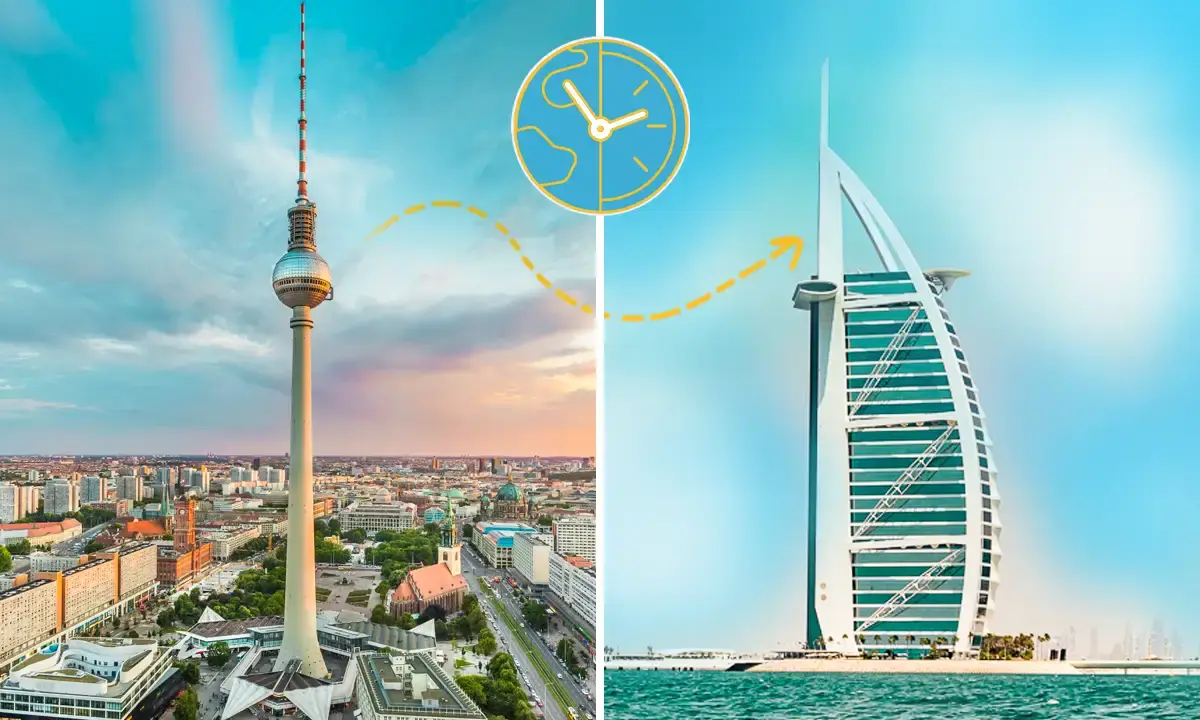
The International Date Line does not directly impact Dubai, as the city lies far west of it. However, its UTC+4 offset creates significant time differences with other major global hubs. For instance, while New York operates on UTC-5 (EST) or UTC-4 (EDT), Dubai remains 9 hours ahead during standard time. This discrepancy underscores the importance of time zone awareness for businesses, travelers, and digital communication.
Comparison of Dubai Time with Major Global Time Zones
To visualize Dubai’s temporal positioning, the following table contrasts GST with four key global cities, highlighting their time zones, current times (as of the latest update), and time differences from Dubai. Note: Current times are illustrative; real-time data should be verified via tools mentioned in later sections.
| City | Time Zone | Current Time (Example) | Time Difference from Dubai (GST) |
|---|---|---|---|
| New York, USA | UTC-5 (EST) / UTC-4 (EDT) | 10:00 AM (EST) | 9 hours behind |
| London, UK | UTC+0 (GMT) / UTC+1 (BST) | 4:00 PM (GMT) | 4 hours behind |
| Tokyo, Japan | UTC+9 (JST) | 7:00 AM (next day) | 5 hours ahead |
| Sydney, Australia | UTC+10 (AEST) / UTC+11 (AEDT) | 6:00 PM (AEST) | 6 hours ahead |
This comparison reveals Dubai’s central role as a bridge between Europe and Asia, offering overlapping business hours with both regions. For example, a 9:00 AM meeting in Dubai aligns with 3:00 PM in London and 4:00 PM in Tokyo, facilitating international collaboration without late-night disruptions.
Historical Context of Gulf Standard Time Adoption
The standardization of GST in Dubai traces back to the 1970s, when the UAE sought to unify its timekeeping systems for administrative and economic cohesion. Prior to this, individual emirates operated on varying local times, creating logistical challenges. The UAE Federal Law No. 1 of 1971 established a single national time zone, adopting UTC+4 to align with Saudi Arabia and other Gulf Cooperation Council (GCC) members. This decision was influenced by: - Oil industry coordination: Seamless scheduling for cross-border energy projects. - Prayer timing: Alignment with Mecca’s solar-based Islamic prayer times, which prioritize geographical consistency over UTC. - Trade facilitation: Synchronization with major trading partners in Asia and Europe.
A pivotal moment occurred in 2010, when the UAE abolished daylight saving time to simplify public schedules and reduce energy consumption. This policy reinforced GST’s permanence, distinguishing Dubai from regions like the U.S. and EU, where seasonal time adjustments remain common.
Manual Calculation of Dubai Time from Other Time Zones
For travelers or professionals without digital tools, calculating Dubai time manually involves understanding UTC offsets and basic arithmetic. The following steps outline the process:
1. Identify the local time zone of the reference city (e.g., New York is UTC-5 during standard time). 2. Convert the local time to UTC: - Add the UTC offset to the local time. For New York (UTC-5), add 5 hours to 12:00 PM to get 5:00 PM UTC. 3. Convert UTC to GST: - Since Dubai is UTC+4, subtract 4 hours from the UTC time. Using the New York example: - 5:00 PM UTC – 4 hours = 1:00 PM GST. 4. Adjust for daylight saving time (if applicable): - If the reference city observes DST (e.g., New York at UTC-4), subtract an additional hour from the UTC conversion.
Formula for UTC Conversion to GST: GST = (Local Time ± DST Offset) + UTC Offset of Local Time – 4 hours Example: London (UTC+0 during GMT) at 3:00 PM → GST = (3:00 PM + 0) – 4 hours = 11:00 AM GST.
For precision, rely on atomic clocks or NTP servers, which synchronize with International Atomic Time (TAI) and UTC. Dubai’s infrastructure leverages these standards to maintain accuracy across critical systems.
Role of International Atomic Time (TAI) and UTC in Global Synchronization
The International Atomic Time (TAI) serves as the ultimate reference for global timekeeping, derived from over 400 atomic clocks worldwide. TAI is not affected by Earth’s rotation and is ~86,400.002 seconds ahead of UTC due to periodic "leap seconds" adjustments. UTC, the civil time standard, incorporates these leap seconds to stay aligned with astronomical time while remaining practical for daily use.
Dubai’s alignment with UTC+4 is maintained through: - GPS and satellite signals: Devices in Dubai receive time data from GPS satellites, which broadcast UTC via atomic clocks onboard. - Network Time Protocol (NTP): Servers in Dubai’s IT infrastructure sync with primary time servers (e.g., USNO, PTB) to distribute accurate time across networks. - Government-mandated synchronization: Critical sectors like banking, aviation, and telecommunications use NTP or Precision Time Protocol (PTP) to ensure sub-millisecond accuracy.
The UAE’s Telecommunications Regulatory Authority (TRA) oversees time synchronization standards, ensuring compliance with ISO 8601 and IEC 61558 for industrial applications. This framework underpins Dubai’s reputation as a smart city, where time accuracy is integral to autonomous systems, financial transactions, and emergency services.
Dubai time is more than a geographical coordinate—it is the invisible thread stitching together commerce, culture, and connectivity across continents. As the city continues to innovate with smart infrastructure and global trade demands, its time zone remains a strategic advantage, offering seamless overlaps with Asia and Europe while presenting unique hurdles for remote workers and travelers. Whether through the precision of atomic clocks or the adaptability of its 24/7 lifestyle, Dubai’s relationship with time reflects its ambition: a city that never sleeps, where every second counts in the pursuit of progress.
Leave a Comment
Comments are moderated before appearing. The data you submit is processed according to the Privacy Policy of Arsenal.